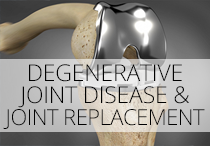
When a New Joint Can Give You a New Life
Severe arthritis or damage to a joint can gradually take away the things we often take for granted—walking comfortably, climbing stairs, working, exercising, sleeping well or enjoying time with family.
Joint replacement can restore movement, reduce pain and help you return to an active and independent life.
As an Orthopaedic, Knee, Sports & Joints Surgeon, I believe joint replacement should not be the first answer to every joint problem. The decision should come after understanding the cause of pain, the condition of the joint, the patient's functional needs and the available alternatives.
A thoughtful approach to joint replacement
Is replacement really necessary?
Not every painful joint needs to be replaced. Depending on the condition, symptoms may be managed with medication, physiotherapy, exercise, lifestyle modification, injections or other joint-preserving treatments. Replacement is considered when these options no longer provide satisfactory function or quality of life.
Choosing the right procedure
Joint replacement is not a one-size-fits-all operation. The type of replacement and surgical approach should be individualized according to the patient's age, activity level, joint condition, alignment, bone quality and expectations.
Modern surgical techniques
Contemporary joint replacement techniques aim to restore appropriate alignment, stability and movement while preserving as much healthy tissue as possible.
Recovery is part of the operation
Successful joint replacement does not end in the operating room. Early movement, appropriate pain management, physiotherapy, strengthening and gradual return to activity are essential components of recovery.
Common joint replacement procedures
Total knee replacement
Partial knee replacement
Hip replacement
Shoulder replacement
Revision joint replacement when required
The goal is more than a pain-free joint
A successful joint replacement should help you move better, function better and live better.
My approach is to carefully assess each patient, discuss both surgical and non-surgical options, and recommend replacement when the expected benefits outweigh the risks.
Preserve when possible.
Replace when necessary.
Restore function whenever possible.
The objective is not simply to replace a joint—it is to help restore movement, independence and quality of life.